

Finding a water meter is often less complicated once the route of the incoming water service is understood. At HKT LORA, we view meter location as part of the wider installation environment because access, temperature, pipe layout, and communications can all influence how a metering system is planned.
If you are asking is your water meter inside or outside, both answers are possible. Utilities commonly place residential meters indoors near the main water line, while some properties use an outdoor meter pit. The correct location depends on local utility practice, building design, climate, service routing, and the age of the property.
Start With the Incoming Water Service
The best place to begin is where the water service line enters the building. Connecticut Water explains that most residential meters are located inside, often in a basement, crawlspace, or utility closet, close to the main valve. This makes the service entry point a useful reference when the meter is not immediately visible.
In a basement, look along the wall facing the street or the direction of the public water main. Follow the main cold water pipe from the point where it enters the structure. The meter is often installed on that line before water is distributed to fixtures, appliances, or separate branches inside the property.
Is Your Water Meter Inside or Outside
Indoor water meters are common because the building can provide protection from weather and easier access to nearby plumbing. A basement, crawlspace, or utility closet may also place the meter close to the main shutoff valve, which is useful during inspection, maintenance, or an emergency.
Outdoor meters are commonly placed in meter pits or boxes below or near ground level. Connecticut Water notes that some customers have an outdoor meter pit on the part of the property where the water service line enters the home. The cover may be visible from a yard, verge, or driveway edge along the service route.
Local rules can strongly affect placement. New York City DEP documentation, for example, states that outdoor pit meters are used where an indoor location is not possible and requires approved installation conditions. This illustrates why one city or utility should not be used as a universal model for every property.
How to Recognize an Outdoor Meter Pit
An outdoor meter pit usually has a durable cover installed close to ground level. It may not be labeled in a way that is obvious to a homeowner, and the meter itself may sit below the cover. Some covers require a special key, so customers should follow local guidance rather than forcing them open.
When checking outside, follow a logical line from the street toward the building. Look for a small utility cover along the likely water service path. If several covers are present, do not assume they all contain water equipment because gas, telecommunications, irrigation, or other services may use separate enclosures.
If the meter cannot be found safely, the water provider can often confirm its recorded location. This is useful for older or renovated properties where the original installation is less obvious.
Why Location Matters Beyond Finding the Meter
Meter location affects more than convenience. Indoor and outdoor environments create different requirements for temperature protection, moisture exposure, access, and maintenance. A meter in an unheated crawlspace may still face cold weather risk even though it is technically indoors, while an outdoor pit may require specific protection required by the utility.
Access is another practical issue. Utilities or technicians may need to inspect, test, repair, or replace metering equipment. Storage, permanent construction, landscaping, or other obstacles should not make the meter difficult to reach. Keeping the surrounding area accessible can simplify future service work.
Whether a water meter is installed indoors or outdoors can affect far more than its physical location. The installation environment influences protection against temperature and moisture, communication planning, maintenance access, and the ease of future inspection or replacement. For project teams and property owners, identifying the meter location early helps ensure that these practical requirements are considered before installation or troubleshooting begins.
Smart Metering Does Not Remove Physical Location
Wireless reading can reduce the need to visit a meter simply to collect consumption data, but the device still exists at a physical point in the plumbing system. Installation, valve work, inspection, and replacement continue to require access even when readings are transmitted remotely.
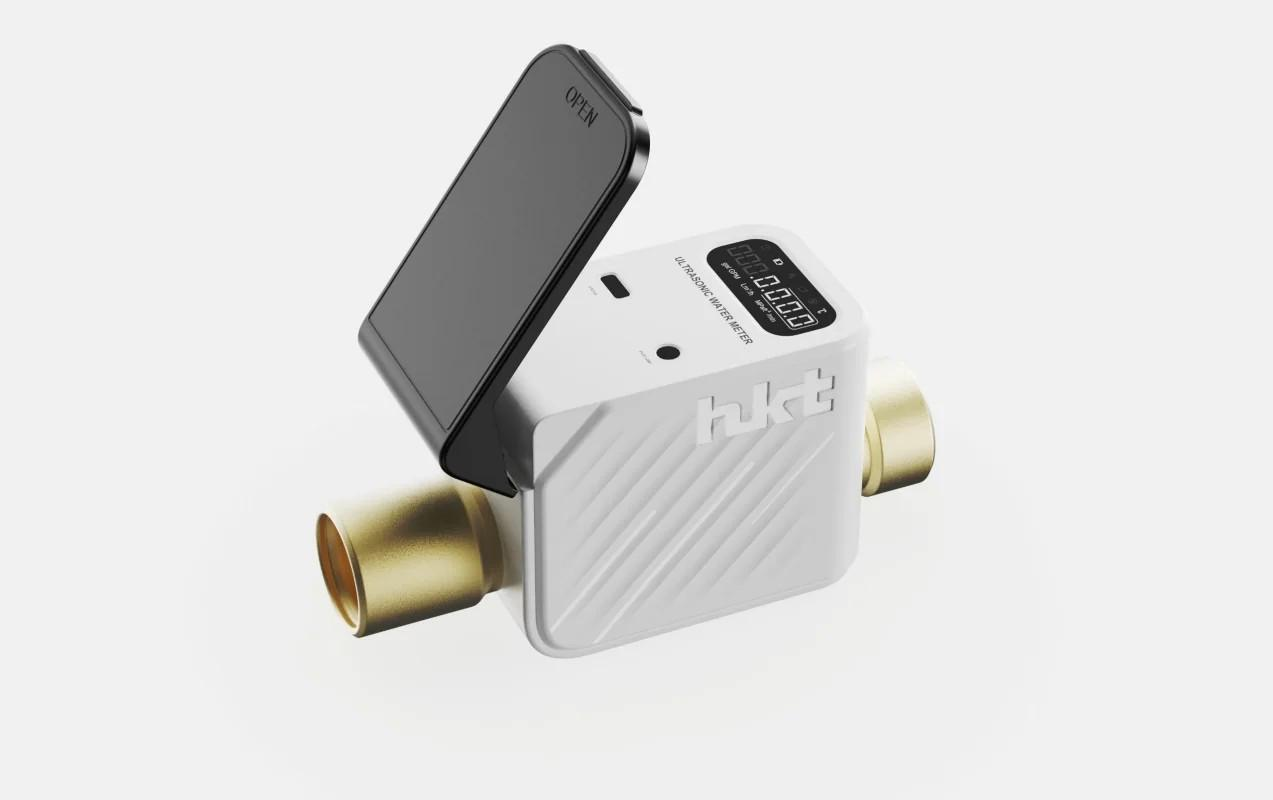
Our HKT LORA LoRaWAN Ultrasonic Valve Controlled Water Meter is an example of connected metering. According to the official product page, the device periodically transmits cumulative flow and battery level data to nearby LoRaWAN gateways, which forward the data toward the cloud platform. It also supports remote valve control.
The published specification lists optional LoRaWAN frequencies of 433 to 510 MHz or 863 to 928 MHz and a working temperature range from minus 20 to plus 55 degrees Celsius. These values describe product capabilities, but they do not determine whether a specific property should use an indoor or outdoor installation.
For wireless projects, meter position can also affect radio planning. Walls, below grade pits, surrounding structures, and gateway placement may influence communication conditions. We therefore treat physical location and wireless design as connected planning questions rather than assuming that remote reading makes the installation environment irrelevant.
A Simple Method for Finding the Meter
When someone asks is your water meter inside or outside, we recommend starting indoors at the main water service entry, checking the basement, crawlspace, garage, or utility area, and then following the expected service route outdoors if no meter is found.
At HKT LORA, we see this basic location check as an important first step before planning connected water metering. Once the meter position is confirmed, teams can evaluate access, environmental conditions, pipe arrangement, gateway coverage, and platform requirements with much better context.