

Why Is IoT Cattle Tracking Still Hard to Get Right?
Most ranchers who try IoT cattle tracking run into the same wall: positioning accuracy is only half the problem. The harder part is getting that location data off an animal that may be grazing 10 kilometers from the nearest fence post, let alone a cell tower.
A tracker that pinpoints a cow’s exact coordinates is useless if the signal never reaches a network. That’s why choosing a connectivity method decides whether cattle tracking devices actually work on your land.
What Connectivity Options Exist for Cattle Tracking Devices?
Three technologies dominate IoT cattle tracking today: cellular, satellite, and LoRaWAN (Long Range Wide Area Network). Each moves data differently, and each carries a different cost structure.
How Does Cellular Connectivity Work for Livestock Trackers?
Cellular trackers (LTE-M or NB-IoT) send data through the same towers your phone uses. One rural coverage study found LTE-M reaching about 99.9% of outdoor devices within its service area . However, that figure only holds where towers already exist — large grazing blocks beyond that range go dark, and carriers charge a monthly subscription per device.
How Does Satellite Connectivity Work for Remote Herds?
Satellite trackers transmit through providers like Iridium or Globalstar, giving coverage almost anywhere on Earth. That reach comes at a price: subscription costs typically run $15–$100+ per device monthly, compared to $5–$30 for cellular . For most commercial herds, satellite is reserved for animals in truly unreachable terrain.
How Does LoRaWAN Connectivity Work for Cattle Tracking?
LoRaWAN trades bandwidth for range and battery life. Vendors commonly report 5–15 km of coverage per gateway in open, flat terrain. Unlike cellular tracking, a private LoRaWAN deployment does not require a per-device cellular airtime subscription, although the operator still needs to account for gateway, backhaul, and platform costs.
|
Factor |
Cellular (LTE-M/NB-IoT) |
Satellite |
LoRaWAN |
|
Coverage |
Limited to areas within tower range |
Effectively global, regardless of terrain |
Local, defined by self-deployed gateways |
|
Power draw |
Moderate |
High |
Low |
|
Relative battery life |
Shorter than LoRaWAN |
Shortest of the three |
Longest of the three |
|
Recurring cost structure |
Per-device carrier subscription |
Per-device subscription, generally higher than cellular |
No per-device airtime fee; gateway, backhaul, and platform costs still apply |
|
Best fit |
Herds near existing towers |
Isolated, high-value animals |
Large or off-grid pastures |
Why Does LoRaWAN Fit Ranch and Pasture Environments So Well?
Pastures are exactly the environment LoRaWAN was designed for: wide, open, and often disconnected from cellular infrastructure. Because a private LoRaWAN network doesn’t depend on a carrier, ranchers can build coverage exactly where their herd grazes.
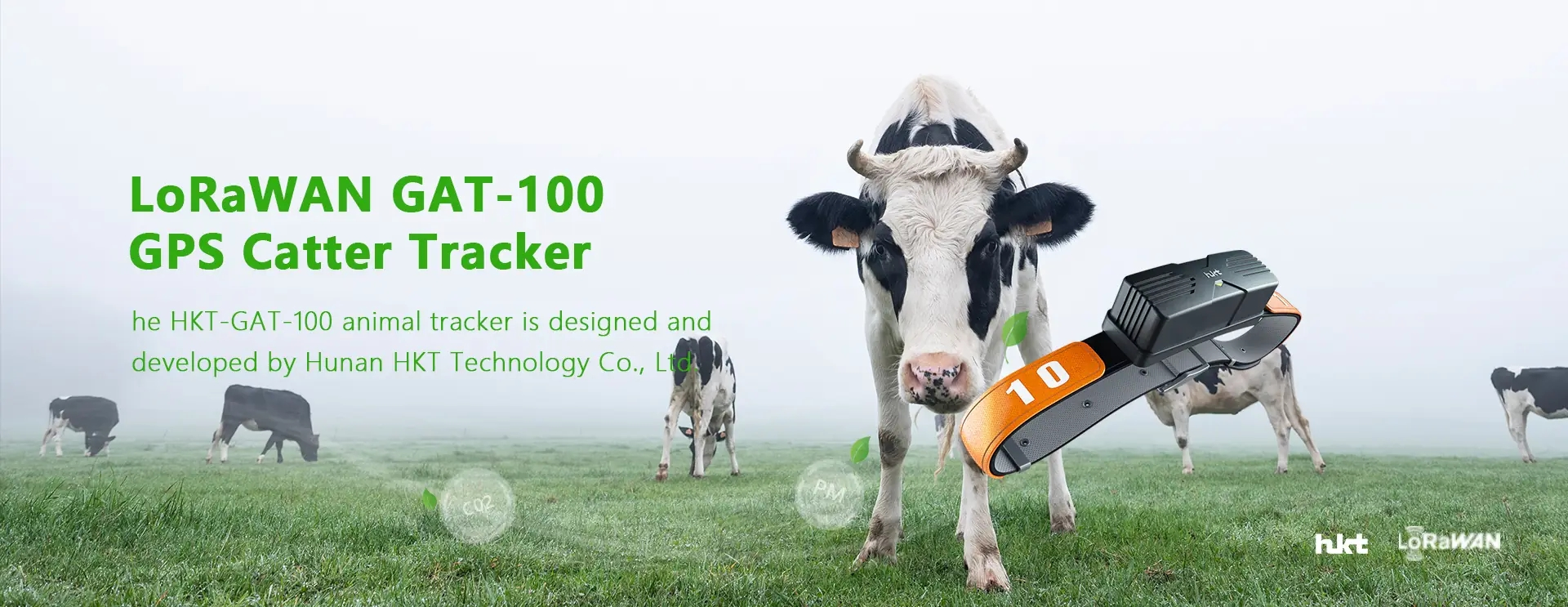
That ownership brings three practical advantages:
- Off-grid deployment— one or two gateways can blanket a pasture with no cellular backhaul required.
- Large-scale concurrent connections—a properly designed LoRaWAN network can support a large number of tracking devices, with practical capacity depending on reporting intervals, payload size, gateway density, and network configuration. So scaling from 50 head to 5,000 doesn’t mean rebuilding the network.
- Remote OTA configuration— over-the-air (OTA) updates let managers adjust reporting intervals or settings without physically handling each collar.
How Do You Track Cattle Where There’s No Cellular Signal?
This is the exact gap LoRaWAN was built to close. In areas without reliable cellular coverage, a private LoRaWAN network can provide an alternative communication path when gateways are deployed across the ranch.
Actual GPS performance depends on factors such as device placement, satellite visibility, antenna conditions, and the configured reporting interval. This reminds us that a reminder that collar placement, antenna design, and update-interval settings all affect real-world performance, not just the underlying radio technology.
How Does HKT LORA’s Cattle Tracking System Work?
HKT LORA has built LoRaWAN sensors, gateways, and cloud platforms since 2010, and its LoRaWAN cattle GPS tracker applies that off-grid approach directly to livestock. HKT-
GAT-100 uses two 19,000mAh ER34615 Li-SOCI2 batteries and is specified for more than three years of battery life at 48 data uplinks per day, according to HKT LORA’s current product specifications.
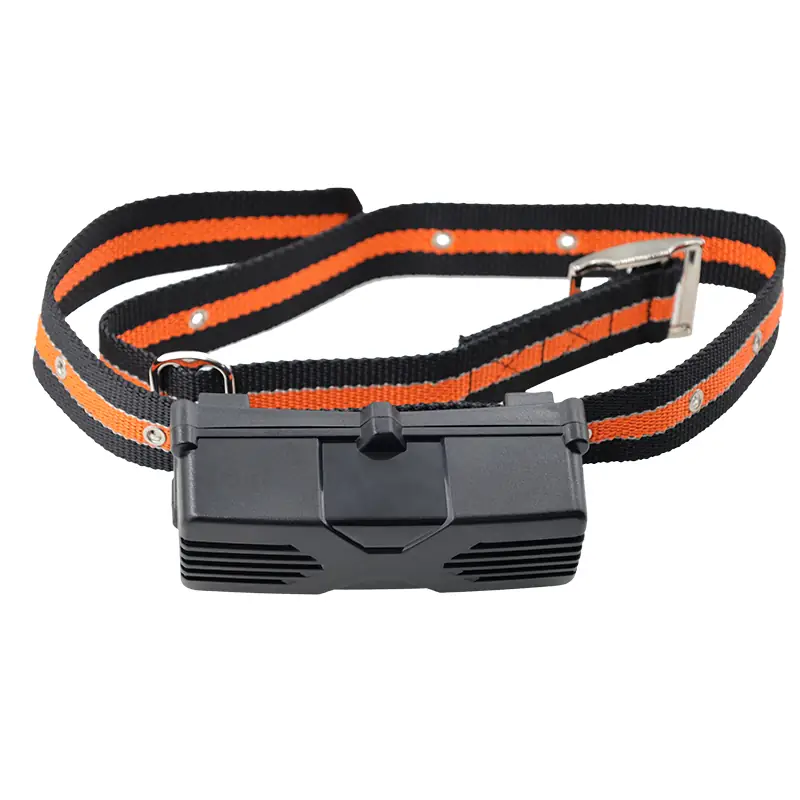
Beyond the collar itself, HKT LORA supplies the gateways and cloud platform as one system, so ranchers manage geofencing, herd location, and behavior alerts from a single access point instead of juggling separate tools per pasture — cutting labor time and reducing the operational cost of manual headcounts. Every unit is backed by quality certification, and configurations can be customized to a herd’s tag count, frequency band, or reporting interval, from single sample orders to small-batch and large-volume production runs. Typical delivery lands inside one month, shipped directly with no customs paperwork on the buyer’s end, and the team offers free consultation before you commit to an order.
How Should You Choose the Right Connectivity for Your Herd?
Match the technology to the terrain, not the marketing claims:
- Herds near existing cell towers— cellular trackers offer rich, near timely data with minimal setup.
- A handful of high-value animals in remote terrain— satellite justifies its higher subscription cost.
- Large or off-grid pastures with dozens to thousands of head— LoRaWAN-based cattle tracking devices cut both labor costs and ongoing subscription fees while giving one management access point for the whole operation.
Whichever path fits your land, the goal stays the same: real-time visibility into where your herd is, without an operational cost that outpaces the value of the data itself.