How Has Water Metering Changed From Mechanical to Smart Systems?
If you manage a water utility or a large property, you’ve probably noticed a strange pattern: billed consumption keeps falling even though nothing about usage has actually changed. The most common culprit is the meter itself. Buyers should also confirm whether the meter supports other communication interfaces or protocols, such as NB-IoT, Wi-Fi, M-Bus, or RS485, when the project requires integration with existing infrastructure.
What Were the Limits of Traditional Mechanical Meters?
Mechanical meters demand manual, on-site readings. A technician must visit every property, log the number, and re-enter it into a billing system by hand. This process is labor-intensive, slow to scale across large districts, and prone to transcription errors.
What Does a Smart Water Meter Do Differently?
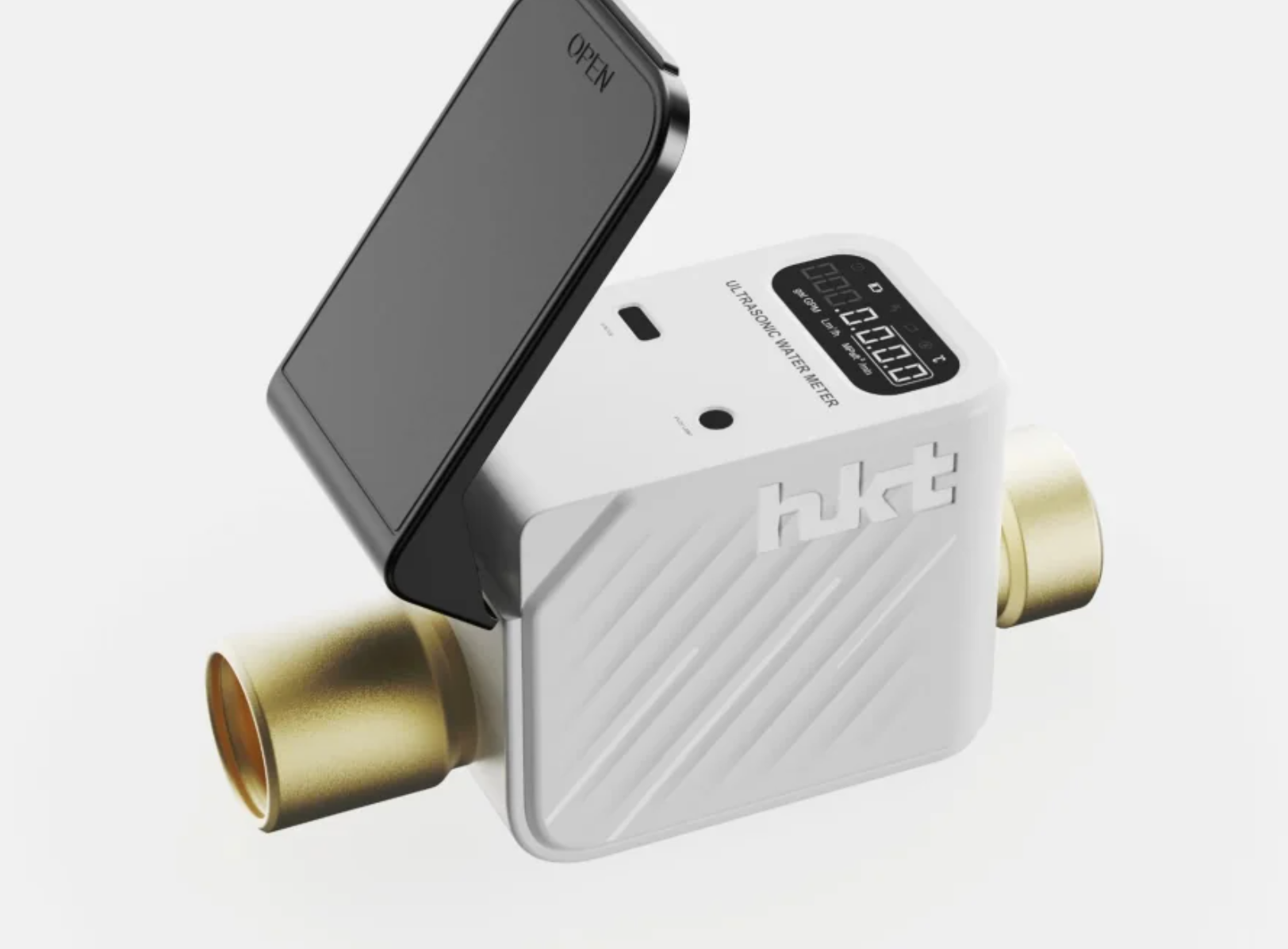
A smart water meter answers this problem by transmitting readings automatically over a wireless network. Ultrasonic models have no moving measurement components, are designed with anti-clogging characteristics, and can detect minimal flow rates that may be difficult for conventional mechanical meters to register.
What Problem Does LoRaWAN Solve for Utilities and Property Operators?
LoRaWAN (Long Range Wide Area Network) solves the connectivity gap between scattered meters and a central management platform. It is a low-power wireless protocol built specifically for devices that need to send small amounts of data over long distances without draining a battery for years.
Why Does Long-Range, Low-Power Connectivity Matter for Metering?
Because water meters are often installed underground, in basements, or spread across large agricultural or residential zones, a single gateway needs to reach many devices at once. A LoRaWAN Water Meter is specified with a maximum line-of-sight transmission distance of 15 kilometers and a sleep current as low as 15μA, which is why a single gateway can potentially cover an entire district instead of relying on cellular data plans per unit. Actual coverage, however, depends on gateway placement, building structures, terrain, and local network conditions.
This is why the resulting closed-loop system delivers four concrete outcomes for the operator: it cuts labor cost by removing manual readings, reduces unwanted supply cost from undetected leaks, centralizes management of multiple sites through one dashboard, and gives administrators real-time visibility instead of monthly snapshots.
What Should B2B Buyers Verify Before Ordering From a Smart Water Meter Supplier?
Before signing a purchase order, a buyer should confirm the meter’s technical fit, not just its price. Because deployments often span multiple countries, the frequency band, certification, and after-sales structure of the smart water meter manufacturer matter as much as the hardware itself.
Does the Meter Match Your Network and Regional Requirements?
LoRaWAN frequency requirements vary by region, so buyers should confirm the regional band before ordering. For example, HKT LORA lists 433–510 MHz and 863–928 MHz options for different deployment requirements, with regional configurations such as EU868, AS923, US915, and AU915 specified in its product documentation. Therefore, buyers should also confirm whether the meter supports other communication interfaces or protocols, such as NB-IoT, Wi-Fi, M-Bus, or RS485, when the project requires integration with existing infrastructure.
Can the Supplier Support Deployment at Scale?
A serious smart water meter supplier should also be able to support the full order lifecycle: samples for pilot testing, small-batch orders for phased rollouts, and large-volume manufacturing once the pilot succeeds — plus configuration changes for local billing or valve requirements.
|
Buyer Concern |
Traditional Mechanical Meter |
LoRaWAN Ultrasonic Smart Meter |
|
Reading method |
Manual, on-site |
Automatic, remote, cloud-synced |
|
Leak detection |
Limited, delayed |
Detects minimal flow / drips |
|
Valve control |
Manual, on-site |
Remote open / close |
|
Data during network outage |
N/A |
Stored locally, re-uploaded on reconnect |
|
Wear over time |
Mechanical parts degrade |
All-electronic, no moving parts |
A World Bank discussion paper reports an average reported non-revenue water (NRW) level of 35% across the utilities included in its dataset, although performance varies substantially between utilities. Automated, high-sensitivity metering is one of the direct tools utilities use to narrow that gap.
Why Do B2B Buyers Consider HKT LORA as a Smart Water Meter Manufacturer?
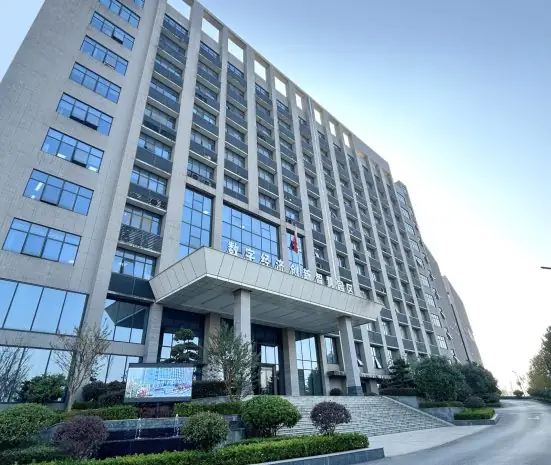
HKT LORA has focused on LoRaWAN IoT device R&D and manufacturing since 2010, operating a self-built industrial park of over 50,000 m² with a complete chain from research to delivery. Its LoRaWAN Ultrasonic Valve-Controlled Smart Water Meter reflects this focus directly.
The meter periodically sends cumulative flow and battery data to nearby gateways, which forward it to a cloud platform — so administrators can check every connection point from one screen instead of dispatching staff. When a balance is overdue, the operator can close the valve remotely; if the meter detects a leak or valve fault, it reports the abnormality automatically.
Product quality is backed by certification rather than by marketing claims alone, and the pricing structure is built to fit different order stages: buyers can start with samples, move to small-batch pilot orders, and scale into bulk manufacturing, with configuration customized to local billing or valve requirements along the way. HKT LORA also offers free pre-sales consultation, arranges direct shipping that handles customs clearance on the buyer’s behalf, and typically delivers within one month of order confirmation. For technical questions or a tailored quote, the team responds to inquiries within 24 hours.
What Other LoRaWAN Solutions Does HKT LORA Support?
The same low-power, long-range LoRaWAN connectivity used in this water meter also underpins HKT LORA’s livestock tracking and monitoring devices, including GPS collar trackers and health-sensing tags used on cattle and sheep. Ranch operators in remote grazing regions face a problem similar to water utilities: large areas with unreliable or absent cellular coverage.
This overlap is why the underlying engineering goals stay the same across both product lines: extend battery life, maximize transmission range, and bring scattered devices back to one management platform. For B2B buyers comparing suppliers, evidence that a manufacturer’s LoRaWAN designs hold up across more than one application is a useful, low-cost signal of engineering depth — separate from any single product’s spec sheet.
Conclusion: Choosing the Right Smart Water Meter Supplier
Before ordering, verify five things: regional connectivity, metering technology, data continuity, remote-control requirements, and supplier support from sampling to mass production. A LoRaWAN ultrasonic meter addresses the core problems of manual reading, undetected leaks, and fragmented management in one closed-loop system. For B2B buyers evaluating options across Europe, North America, South America, Asia, or Africa, working with an experienced smart water meter supplier that offers certified quality, flexible order volumes, and clear delivery timelines reduces both technical risk and time to deployment.