

Drivers circle the block, fuel burns, and tempers rise — all because nobody can see which spaces are actually free. This is the daily reality that smart parking sensor IoT technology is designed to address.
By pairing wireless sensors with cloud-based platforms, cities and property operators can finally see occupancy in real time. HKT LORA, a LoRaWAN device manufacturer based in China, is one of the companies building the hardware layer behind these systems.
What Is an IoT-Based Smart Parking System?
An IoT parking sensor is a wireless device that detects whether a vehicle is present in a parking space and reports that status automatically. IoT, short for Internet of Things, refers to physical devices that collect and exchange data over a network without manual input.
Many loT parking deployments use low-power wireless protocols such as LoRaWAN (Long Range Wide Area Network) which is designed for devices that transmit smal amounts of data over relatively long distances.
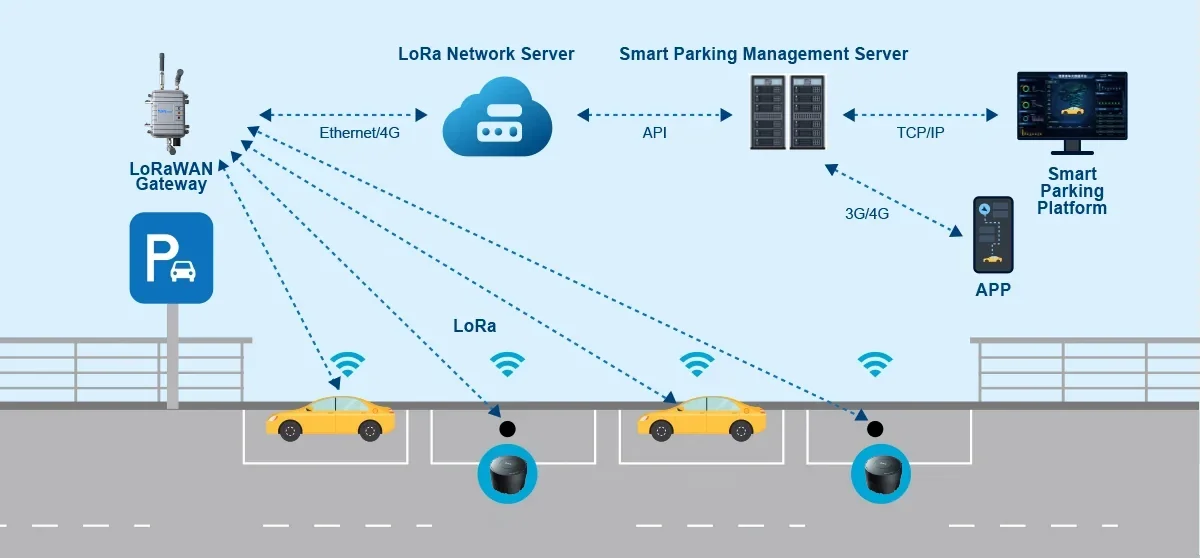
Here is how the data actually travels from a parking space to a manager’s dashboard:
- A sensor embedded in or mounted on the parking space detects a vehicle entering or leaving.
- The sensor sends the status change to a nearby LoRaWAN gateway.
- The gateway forwards the data to a network server, which decodes it.
- The decoded data feeds into a smart parking platform, where operators can monitor current occupancy status.
This chain means a parking manager does not need staff walking the lot to know which spaces are open — the data arrives on its own.
Why Do Cities and Operators Need IoT Parking Sensors?
Cities need IoT parking sensors because manual parking management wastes time, fuel, and revenue that real-time data can recover. Drivers hunting for a space add unnecessary miles to city streets, and operators without occupancy data cannot price or enforce parking effectively.
The financial case is measurable. The global smart parking market was valued at US$5.1 billion in 2023 and is projected to reach US$13.8 billion by 2032, growing at an annual rate of 11.3% .
|
Metric |
Result |
Source |
|
Global market size, 2023 |
US$5.1 billion |
IMARC Group |
|
Projected market size, 2032 |
US$13.8 billion |
IMARC Group |
|
Parking search-time reduction (LA, Houston) |
~30% |
International Parking & Mobility Institute |
|
Parking turnover increase (San Francisco) |
20% |
SFMTA smart-meter program |
|
Double-parking reduction (San Francisco) |
30% |
SFMTA smart-meter program |
According to the cited SFMTA program data, smart-meter deployment was associated with changes in parking turnover and double-parking rates, which shows the effect is not theoretical — it shows up in enforcement data.
Beyond revenue, fewer cars circling for parking means less idling and lower localized emissions, which matters for cities working toward air-quality and urban-planning targets.
How Do You Integrate Smart Parking Into a Connected Traffic System?
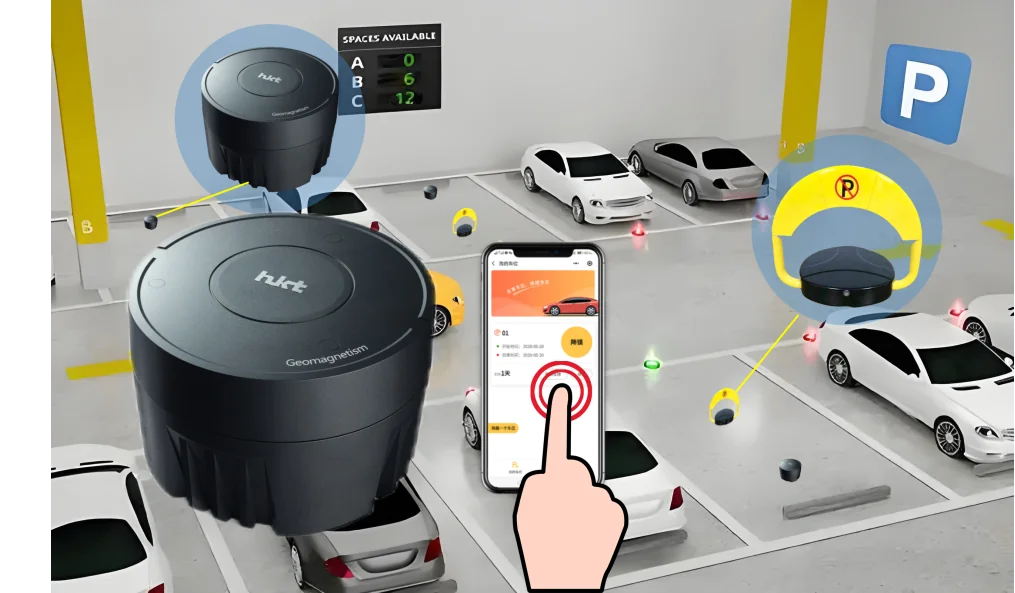
Integration works when three layers connect: sensor infrastructure, pricing logic, and shared data standards. Skipping any one layer leaves gaps that undermine the other two.
Sensor and analytics infrastructure comes first. Occupancy sensors alone only report a binary status; pairing that data with analytics software allows operators to spot patterns, such as which blocks fill up by 9 a.m. daily.
Dynamic pricing follows naturally once occupancy data exists. Instead of a flat hourly rate, operators can raise prices in high-demand zones and lower them elsewhere, spreading demand across a lot rather than clustering it near the entrance.
Cross-platform data interoperability ties it together. A sensor network that cannot share data with a city’s traffic management system or a third-party navigation app creates a data silo — isolated information that other systems cannot access or use.
|
Approach |
Manual Parking Management |
IoT-Enabled Parking Management |
|
Occupancy visibility |
Staff patrols or driver guesswork |
Real-time sensor data |
|
Pricing |
Fixed rates |
Demand-based adjustments |
|
Enforcement |
Manual checks |
Automated overstay/violation alerts |
|
Data sharing |
Isolated records |
Interoperable with city/traffic platforms |
How Does HKT LORA Support a Connected Parking Ecosystem?
HKT LORA supports this ecosystem by manufacturing the sensor hardware and offering the ordering flexibility that operators need to deploy it at scale. The company’s lora parking sensor detects vehicle presence and reports status through a LoRaWAN gateway to a smart parking platform, matching the data flow described earlier in this article.
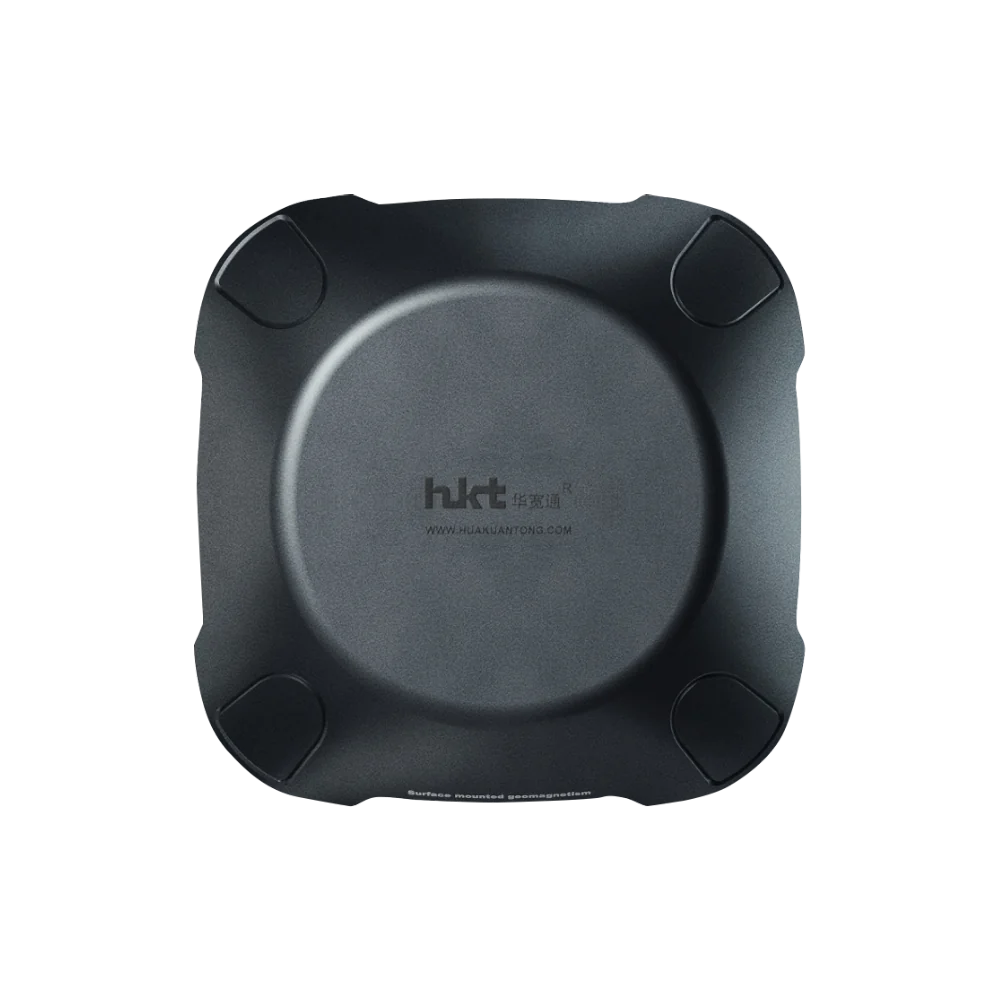
The sensor is built for roadside, mall, office, and mixed indoor-outdoor lots, and it supports three practical use cases: parking guidance, overstay/violation enforcement, and occupancy data collection for lot-layout planning.
For operators evaluating suppliers, the wider case for choosing this hardware line rests on a few concrete factors rather than marketing language: For operators evaluating a supplier, HKT LORA offers certification support, sample and small-batch ordering, OEM/ODM customization,
and technical support for different deployment requirements.
Operators managing more than surface spaces can also review the LoRaWAN Embedded Parking Sensor for below-ground installations, or the LoRaWAN Smart Parking Lock for reserved-space control — both use LoRaWAN connectivity and can be integrated into a connected parking management system alongside the MPS 100.
Together, these devices can give operators a unified management interface for monitoring different parking areas, reducing the need to manage separate systems for each location.
Conclusion: Building Your Connected Parking Ecosystem
Smart parking is not a single device — it is a chain that starts with a sensor and ends with a decision an operator or driver can act on. Connected parking systems can give operators more timely occupancy data, helping them improve parking guidance enforcement, and space management, backed by documented programs like San Francisco’s.
For operators evaluating parking hardware, HKT LORA offers LoRaWAN parking sensors,
customization options, and technical support for different deployment requirements.