

Water metering begins with measuring how much water passes through a pipe. Modern systems can also transmit readings and support remote management. At HKT LORA, we work with connected metering solutions, so understanding each technical layer is important before comparing products.
For anyone asking how water meter works, the easiest approach is to separate the process into measurement, calculation, communication, and management. A meter first senses water flow. Electronics then convert that information into usable consumption data. If the device includes wireless connectivity, selected readings can be transmitted to a gateway and onward to a management platform.
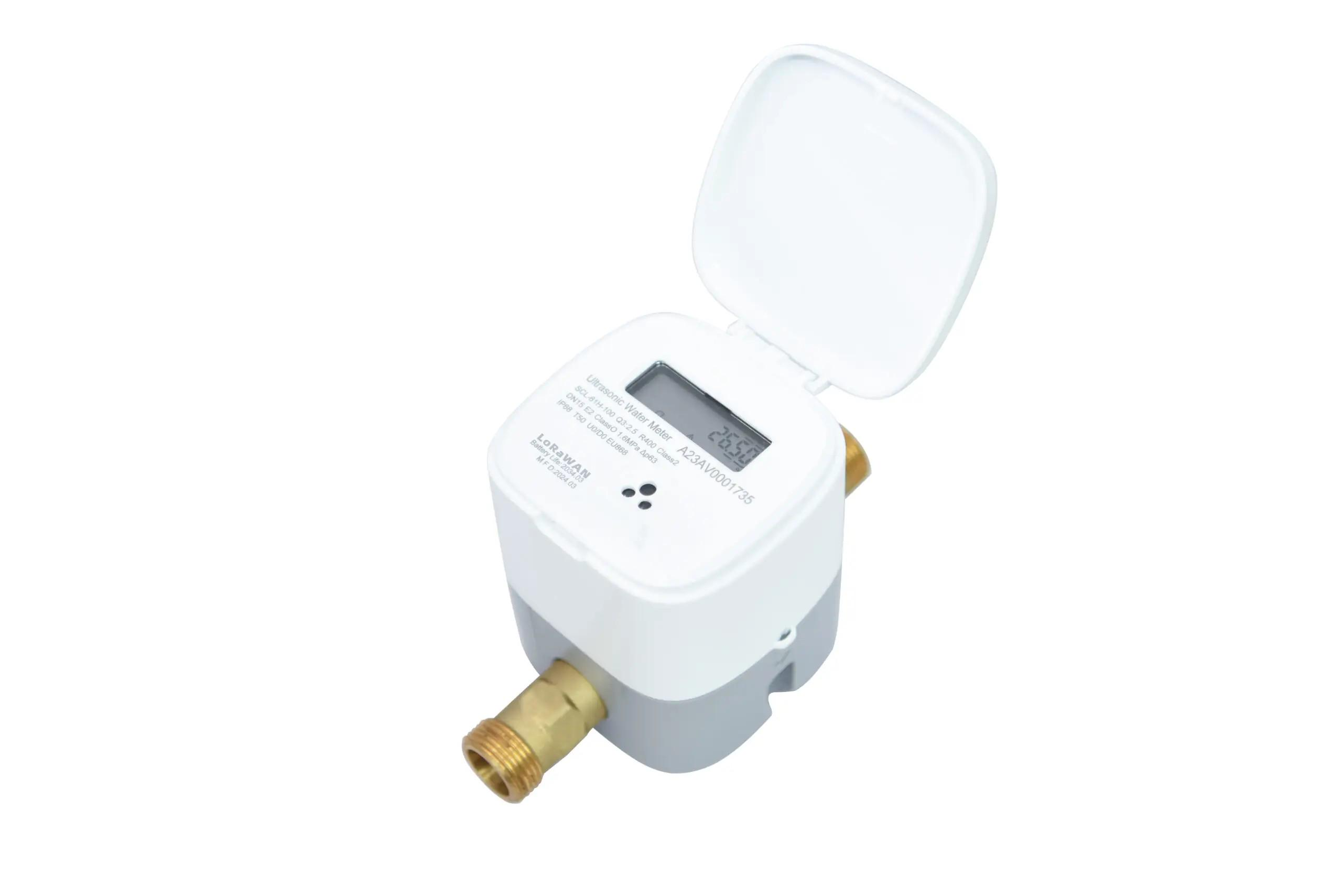
How Water Meter Works in Basic Terms
A water meter measures the volume of water moving through a defined flow path. Traditional mechanical meters use moving components that respond to flow. Ultrasonic meters use sound signals instead of a rotating measuring element. This difference affects how the meter detects movement, but both approaches ultimately aim to convert flow into a measurable quantity.
In an ultrasonic design, transducers send sound pulses through the water. When water is flowing, the travel time of a pulse moving with the flow differs from the travel time of a pulse moving against it. The electronics compare these transit times and use the calibrated geometry of the meter to calculate flow.
That calculated flow can then be accumulated over time. This is how the meter develops a total consumption figure rather than only showing what is happening at one instant. Instantaneous flow describes the current rate, while cumulative flow represents the total quantity that has passed through the meter during a period.
Why Measurement and Communication Are Separate
A smart meter still needs a reliable measuring principle before any wireless feature becomes useful. Wireless connectivity does not measure water by itself. It only transports data that the meter has already generated. Keeping this distinction clear helps system integrators evaluate metrology and communications as two connected but separate functions.
This is particularly relevant when considering how water meter works in a LoRaWAN deployment. The meter acts as an end device. It sends radio messages to one or more gateways, while the gateways relay those messages to a network server through standard IP connections. Application systems then receive the relevant data from the network environment.
The LoRa Alliance describes LoRaWAN as a low power wide area architecture for connected devices. Its star of stars topology lets end devices communicate with gateways without forwarding messages for neighboring nodes. For water metering, this suits distributed devices that periodically report small amounts of information.
What Data a Connected Meter Can Provide
Different products expose different information, so buyers should rely on the specific product page or specification sheet. Common categories can include cumulative consumption, device status, battery information, alarms, or valve status, but these functions should never be assumed unless the manufacturer documents them.
A connected system can reduce dependence on repeated manual reading when the meter is configured to report remotely. The value comes from making readings available to operators without requiring every data collection event to happen at the installation point. However, reporting intervals, wireless coverage, payload formats, and platform integration still need to be planned.
Remote control is another separate function. Some meters include a valve that can be operated through the management system. In those products, measurement determines how much water has passed, communication carries data and commands, and the valve performs a physical control action. Understanding these roles prevents different capabilities from being treated as one feature.
What Specifications Matter in Practice
When evaluating a smart water meter, teams should review the metering method, communication protocol, supported frequency range, operating conditions, power requirements, and the way data reaches the application. Wireless range figures should also be read carefully because line of sight values do not represent every real installation.
Building materials, underground locations, antenna placement, gateway position, and local radio conditions can affect communication. Published transmission figures should therefore be treated as reference data rather than guaranteed site performance.
A Product Example From Our Portfolio
Near the end of the evaluation process, our HKT LORA LoRaWAN Ultrasonic Valve Controlled Water Meter provides a practical example. Its official product page states that the device periodically sends cumulative flow and battery level data to nearby LoRaWAN gateways, which aggregate and forward the data toward the cloud platform.
The same product page lists optional LoRaWAN working frequencies of 433 to 510 MHz or 863 to 928 MHz. The specification gives a working temperature range of minus 20 to plus 55 degrees Celsius, a receiving sensitivity below minus 136 dBm, and a maximum line of sight communication distance of 15 kilometers between the gateway and meter module.
The meter also supports remote valve control, and its page states that data history is stored locally during network interruptions and reuploaded after connectivity is restored. These documented functions show why teams should examine both metering behavior and system functions rather than selecting equipment based only on the word smart.
From Water Flow to Useful Information
Understanding how water meter works becomes easier when the full sequence is visible. Water moves through the meter, the sensing system measures flow, electronics calculate and accumulate consumption, and the communication module sends selected information through the network. A management platform can then present that data to operators.
At HKT LORA, we see this sequence as the foundation for evaluating connected water metering. The useful questions are not only how accurately a meter measures, but also what data it reports, how it communicates, how it behaves during network interruptions, and whether the complete system fits the conditions of the intended installation.