

Parking becomes a technology problem when operators need to understand hundreds of spaces without repeated manual checks. At HKT LORA, we approach the subject from the data path outward: a parking system must detect occupancy, transmit the event, deliver it to the correct platform, and turn that information into something operators can use.
Every layer affects the final parking record. The search phrase smart parking solutions with LoRaWAN ground sensors manufacturer therefore covers more than hardware; it also involves sensing technology, installation conditions, wireless architecture, regional frequency requirements, and platform integration.
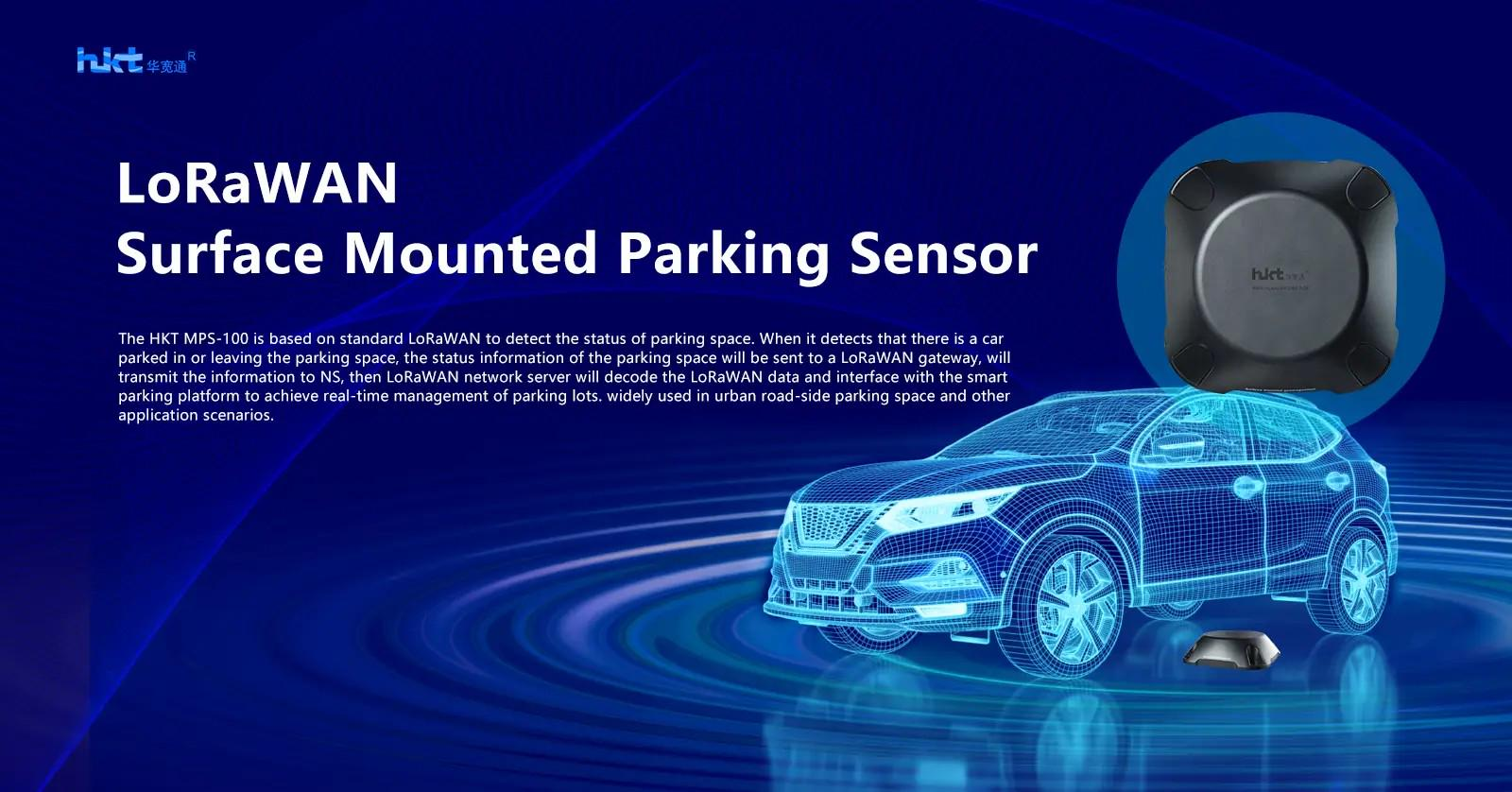
Why Ground Level Detection Changes Parking Operations
Ground sensors are positioned within or on the parking space, close to the vehicle they need to detect. This makes them useful for space level occupancy monitoring because each endpoint can represent a specific bay. When a vehicle arrives or leaves, the sensor can generate a status event that becomes part of the parking management data stream.
The practical value comes after detection. Occupancy data can support parking guidance, operational dashboards, enforcement workflows, and analysis of how spaces are used over time. The LoRa Alliance includes parking management among LoRaWAN smart city applications, showing how connected sensing can help parking providers monitor spaces and adapt operations to actual usage patterns.
Where Ground Sensors Fit in a LoRaWAN Parking Architecture
LoRaWAN is designed for low power wide area IoT communication. Its standard architecture uses end devices that communicate through gateways, while gateways relay messages to a central network server. Application servers then use the delivered data. For parking, the ground sensor functions as the field endpoint and reports compact occupancy information rather than high bandwidth content.
This architecture changes how teams should think about gateway placement. A sensor does not send information directly to a parking dashboard. The wireless link, gateway coverage, network server, payload decoding, and application interface all have roles. We recommend mapping this route so hardware installation and software integration are planned as one system.
Detection Method Matters as Much as Connectivity
LoRaWAN determines how data moves, but it does not determine whether a vehicle has been detected correctly. Ground parking sensors can use different physical sensing methods. Magnetic sensing responds to changes associated with a vehicle, while radar based methods can provide an additional detection input depending on the device design.
Using more than one sensing method can provide multiple detection inputs, but buyers should rely on documented specifications rather than assume every dual sensor design behaves identically. Detection range, sampling interval, installation depth, water exposure behavior, calibration requirements, and local interference should be reviewed against the manufacturer’s technical documentation.
Planning for Regional LoRaWAN Deployment
A parking project has to match the LoRaWAN frequency plan used in its region. Frequency options are not interchangeable across markets, so an international project requires confirmation of the supported regional band before procurement. The LoRa Alliance maintains regional parameters within the standards framework, which is why frequency planning belongs in the early design stage.
Network compatibility should be checked at the same time. LoRaWAN provides a standardized communication framework, but project teams still need to confirm device profiles, payload formats, network server settings, and application requirements. Buyers comparing a smart parking solutions with LoRaWAN ground sensors manufacturer should confirm device profiles, payload formats, network settings, and application interfaces before field installation.
What to Verify Before Installing Sensors
Site conditions can influence both sensing and communications. Underground garages, roadside spaces, commercial lots, and residential parking areas create different challenges for radio coverage and physical installation. Teams should survey gateway coverage, define the mounting method, establish how individual spaces will be identified in software, and decide how device status will be monitored.
Maintenance planning is equally important. Battery access, local configuration, firmware management, and replacement procedures affect lifecycle workload. Physical protection must also match the installation point because embedded devices may face vehicle loads, moisture, temperature changes, and road movement. These details directly affect how practical a parking deployment becomes.
An Embedded Sensor Example
Near the device level, our HKT LORA EPS 100 provides an example of an embedded parking sensor designed around LoRaWAN. The official specification identifies geomagnetic induction plus 24 GHz microwave detection and lists an accuracy rate above 99 percent. Detection distance is configurable from 0.5 to 1.2 meters, while the detection interval is eight seconds and configurable.
The EPS 100 specification also lists standard LoRaWAN 1.0.3, Bluetooth 5.1, and regional options including EU868, CN470, IN865, US915, AU915, and AS923. Water coverage detection is supported, with the device switching to single geomagnetic mode when covered by water. These documented functions illustrate why parking hardware should be evaluated through its detailed specification table rather than broad category labels.
Our broader parking architecture can connect sensors with LoRaWAN gateways, network servers, and parking platforms. For B2B buyers and system integrators, the useful comparison is not simply one sensor against another. The stronger evaluation asks whether the sensing method, communications protocol, supported bands, installation design, and data interface fit the actual site and existing IoT environment.
From Occupancy Events to Useful Parking Decisions
Smart parking depends on more than accurate vehicle detection. Sensor data must move reliably through the LoRaWAN network, reach the appropriate server, and be translated into useful information by the parking platform. Project teams comparing suppliers should therefore examine how these components work together before focusing on individual product features. For a smart parking project, the suitability of a sensor manufacturer depends on its ability to support the required sensing method, regional frequency plan, network integration, and data interface.
At HKT LORA, our role is to supply documented LoRaWAN devices and supporting connectivity components that can be evaluated within this wider architecture. Careful planning around sensing conditions, regional frequencies, gateway coverage, integration, and maintenance gives parking projects a practical foundation for turning individual occupancy events into useful operational information.