

A practical question arises when planning a municipal or industrial IoT deployment: how many LoRaWAN gateway in one town need to achieve consistent coverage? We at HKT LORA find that a single, universal number does not exist. The quantity required is a variable, calculated from a blend of local geography, application demands, and performance expectations. A successful deployment moves beyond guesswork, applying a systematic approach to determine the correct infrastructure scale for reliable operation.
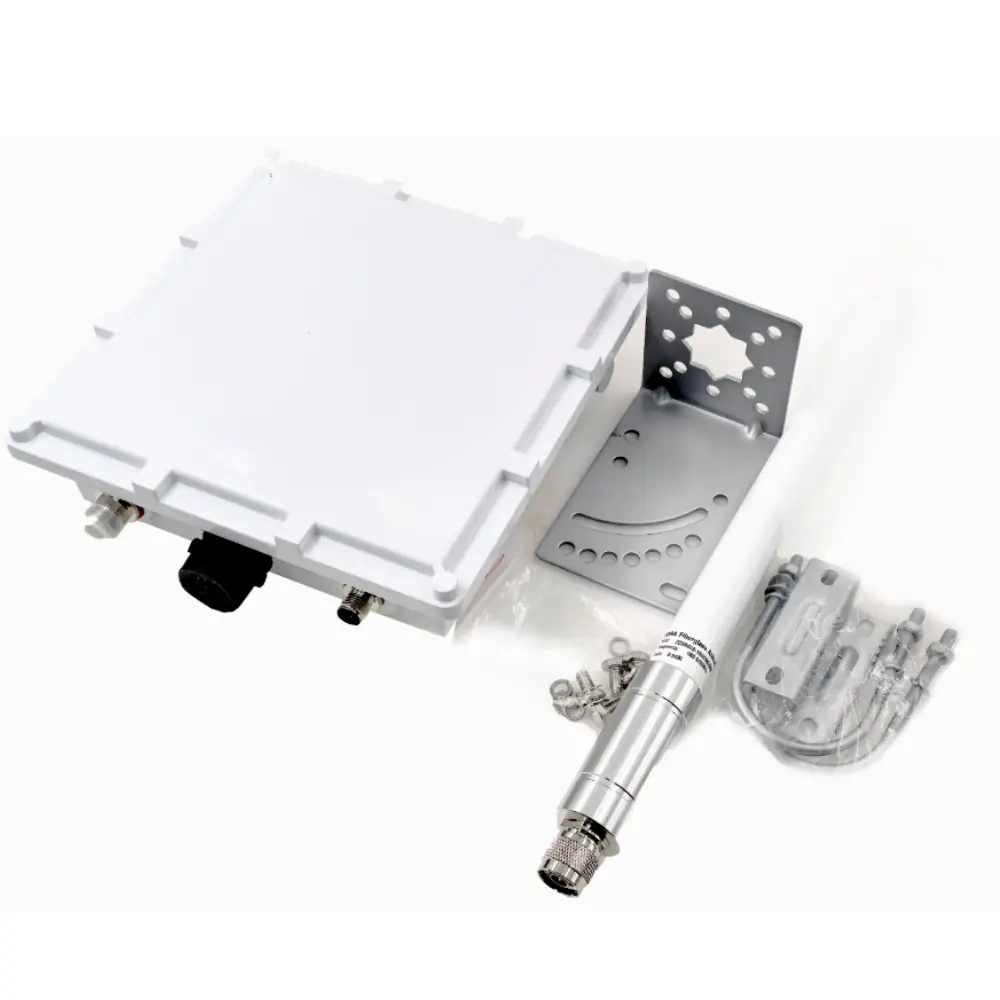
Terrain and Urban Density Dictate the Initial Count
The physical environment is the primary factor in any gateway calculation. A flat, open town with low-rise buildings presents few obstacles to radio signals, potentially allowing a single gateway to cover a broad area. Conversely, a town with significant elevation changes, dense urban cores, or numerous large industrial structures will fragment the radio frequency landscape. In these scenarios, signals are easily blocked or reflected, creating dead zones. Therefore, the first step in answering how many LoRaWAN gateway in one town need is a detailed analysis of the terrain. Initial planning often uses propagation modeling software, but these predictions must be grounded with real-world validation to account for unexpected interference.
Device Quantity and Data Requirements Influence Capacity
While coverage is about reach, capacity is about handling load. A gateway can only process a certain number of messages per unit of time. If a deployment involves thousands of LoRa sensors transmitting frequently—say, every few minutes—a single gateway will become a bottleneck, leading to packet loss and delayed data. The question of how many LoRaWAN gateway in one town need becomes a question of total network capacity. You must aggregate the expected message volume from all devices. For a town deploying smart parking sensors, water metering, and waste bin monitoring, the collective data load will necessitate multiple gateways to ensure all transmissions are received promptly, even if coverage from one location seems theoretically sufficient.
Redundancy and Service Reliability Shape the Final Plan
A robust network design accounts for potential points of failure. Relying on a single gateway creates a critical vulnerability; if that gateway fails due to power loss, hardware issues, or connectivity problems, the entire town’s IoT application goes offline. Determining how many LoRaWAN gateway in one town need must include a strategy for redundancy. Deploying a minimum of two or more gateways with overlapping coverage ensures that if one fails, the others can maintain service. This overlap also improves the overall quality of the network by providing multiple reception paths for messages from LoRa sensors, increasing the likelihood of successful data delivery in challenging signal conditions.
Arriving at the correct number of gateways is a synthesis of environmental analysis, capacity planning, and network resilience. It is a calculation that balances initial investment against long-term performance and reliability. A carefully planned deployment, verified through on-the-ground testing, ensures that the infrastructure not only covers the entire area but also possesses the strength and redundancy to support the town’s IoT vision effectively. This methodical approach turns a simple question into a strategic planning exercise.