

Scaling an IoT network to encompass thousands of sensors appears to present a significant data management challenge. The prospect of countless devices competing for airtime would seemingly lead to congestion and failure. However, the architecture of LoRaWAN is specifically engineered to overcome this. At HKT LORA, we examine the technical principles that allow this network to handle immense device volumes. The method for how LoRaWAN connects to so many things hinges on a combination of elegant radio physics and intelligent network management, avoiding the collisions that plague other wireless systems.
Employing Adaptive Data Rates for Network Efficiency
A primary reason for how LoRaWAN connects to so many things is its use of Adaptive Data Rate (ADR). This is not a static system where all devices shout at the same power and speed. Instead, the network server continuously optimizes the data rate and transmission power for each end device. A sensor close to a gateway will communicate quickly using a higher data rate, freeing up airtime. A distant device will use a slower, more robust rate. This dynamic adjustment ensures that each transmission uses the minimal necessary amount of the wireless spectrum, which dramatically increases the overall capacity of the network and allows a single gateway to serve a vast population of devices.
Utilizing a Multi-Channel, Aloha-Based Protocol
The fundamental access scheme is another component explaining how LoRaWAN connects to so many things. Devices typically use a pure ALOHA protocol, meaning they transmit whenever they have data, without first checking if the channel is clear. While this seems chaotic, it is made feasible by the use of multiple, parallel channels and the unique properties of LoRa modulation. LoRa signals using different spreading factors are orthogonal; they can be received simultaneously on the same frequency without destroying each other. This means a gateway can decode a slow signal from a faraway device and a fast signal from a nearby one at the same time, effectively multiplying the network’s capacity.
Leveraging Gateway Redundancy and Centralized Control
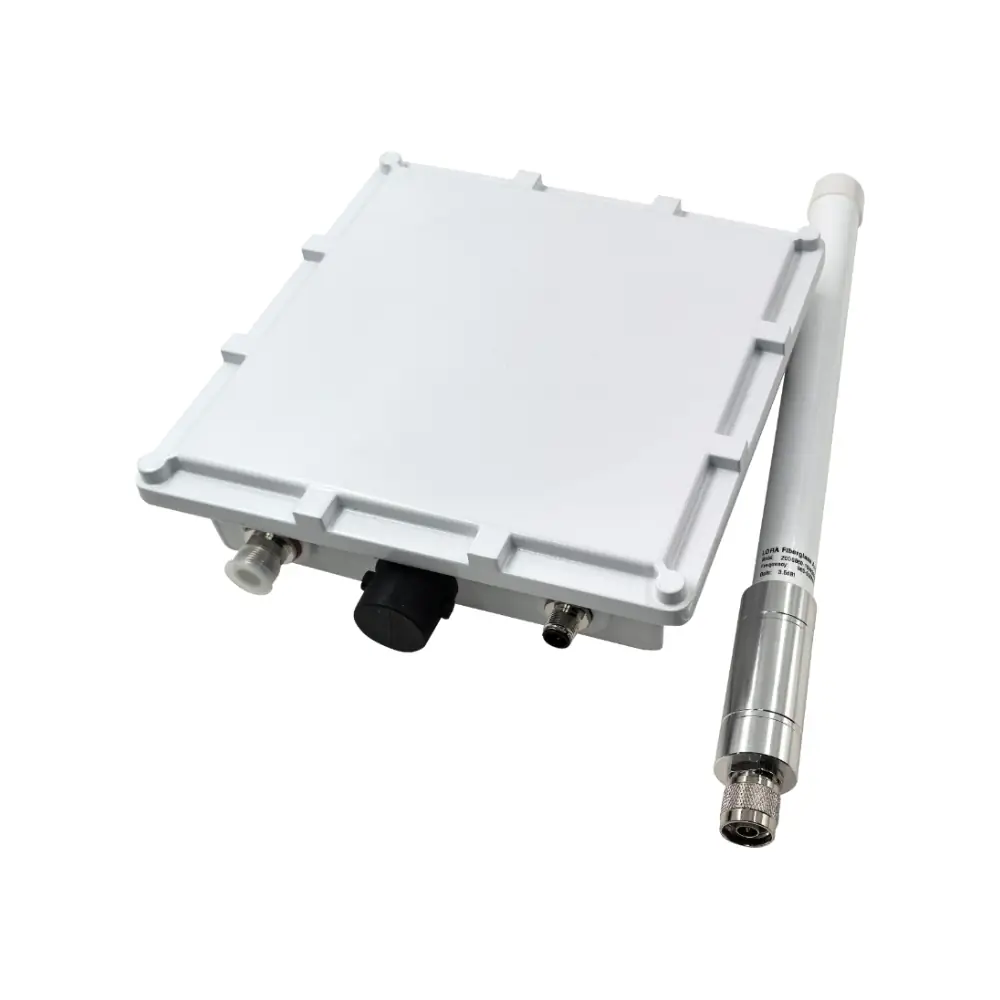
The system’s architecture further supports mass connectivity through its decentralized reception and centralized logic. When a device transmits, every gateway in range picks up the message and forwards it to the network server. This spatial diversity means a packet has multiple chances to be received successfully, compensating for any single gateway’s temporary outage. The network server, as the central brain, then filters these duplicates. This setup removes the need for complex coordination between gateways, simplifies the design of the end devices, and creates a robust, scalable system that manages the chaos of many concurrent transmissions.
The capacity of a LoRaWAN network to integrate a high density of devices is not an accident but a result of its core design. The synergy between adaptive data rates, orthogonal spreading factors, and a centralized server managing redundant gateways creates a highly scalable environment. This layered approach is what makes large-scale sensor networks practical for applications like smart cities and asset tracking. At HKT LORA, our testing procedures evaluate how devices perform within this complex ecosystem, ensuring that each component reliably contributes to the broader goal of seamless, large-scale connectivity.