

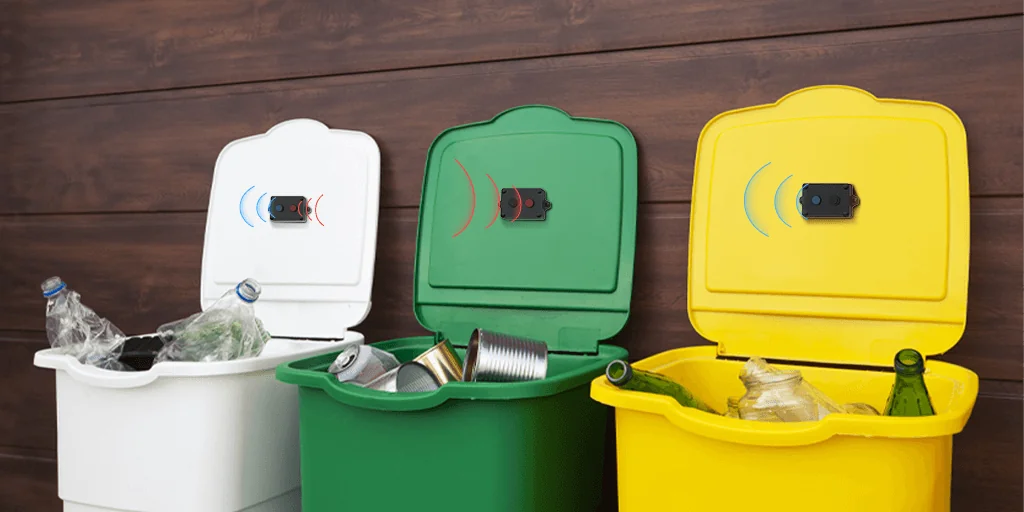
When clients ask us about the application of ultrasonic distance sensor, we often point to one of our most impactful solutions: smart trash bin monitoring. At HKT LORA, we’ve developed sensors that not only measure fill levels but also provide real-time insights into the operation of waste bins across cities and industrial sites. By combining ultrasonic detection with LoRaWAN connectivity, our devices help cities and enterprises streamline sanitation operations and improve efficiency.
The application of ultrasonic distance sensor goes far beyond simple measurement. Our sensors empower operators to make informed decisions, optimize collection routes, and ensure that resources are used where they are most needed. With years of R&D experience, we’ve designed products that are accurate, durable, and easy to integrate into existing IoT frameworks.
Sensor Precision and Reliability
Understanding the application of ultrasonic distance sensor starts with recognizing its core functionality. Ultrasonic sensors emit sound waves and measure the time it takes for the echo to return, calculating distance accurately without requiring direct contact.
At HKT LORA, we’ve leveraged this principle to design trash bin monitoring sensors that remain reliable in diverse conditions. Rain, dust, or fluctuating temperatures do not compromise measurement accuracy. Our engineering team has focused on advanced hardware design and software algorithms, ensuring high stability and long-term performance. By doing so, we can provide our clients with dependable data for efficient decision-making.
Transforming Waste Management and Urban Operations
One of the most exciting applications of ultrasonic distance sensor is in trash bin monitoring. These sensors are suitable for measuring fill levels in a variety of trash cans and even parking spaces. They are widely used in public sanitation management, helping municipalities identify overflow bins before they become a problem.
Through real-time monitoring, our sensors address common challenges in sanitation operations: unclear overflow statuses, inefficient collection routes, and uneven distribution of bins. For enterprises and city managers, this translates into reduced labor costs, optimized resource allocation, and improved operational efficiency. Our smart bin monitoring system not only collects data but also allows for predictive maintenance and timely intervention, making urban environments cleaner and smarter.
Seamless Integration with IoT Networks
The application of ultrasonic distance sensor reaches its full potential when integrated into IoT networks. At HKT LORA, we ensure that our sensors communicate seamlessly over LoRaWAN networks, transmitting data over long distances with minimal power consumption.
This wireless connectivity allows operators to monitor multiple sites from a single dashboard, receive alerts in real time, and analyze historical data for trend insights. Additionally, our products support scalable deployments, so clients can start with a small network of sensors and expand as their needs grow. By combining sensor technology with reliable IoT communication, we make smart monitoring accessible and actionable.
Conclusion
The application of ultrasonic distance sensor extends far beyond basic measurement—it transforms how cities and enterprises manage operations. Our trash bin monitoring sensors provide precise, real-time data that improves efficiency, reduces operational costs, and enhances the overall management of public spaces.
At HKT LORA, we are committed to delivering high-quality, LoRaWAN-enabled IoT solutions that meet the evolving needs of our clients. By integrating ultrasonic sensing technology with smart connectivity and robust design, we empower organizations to operate smarter, cleaner, and more efficiently. The result is not just better monitoring—it’s a step toward smarter, data-driven urban management.