

When comparing IR distance sensor vs ultrasonic, the key lies in how each technology measures and interprets distance. Infrared (IR) sensors rely on the reflection of infrared light to detect nearby objects, making them ideal for short-range and highly responsive measurements. In contrast, ultrasonic sensors use high-frequency sound waves that bounce off surfaces and return to the sensor — enabling accurate detection over longer distances and across a wider range of environmental conditions.
At HKT LORA, we have explored the strengths of both sensor types while developing our advanced LoRaWAN-based solutions. In the field of IoT, the debate of IR distance sensor vs ultrasonic is more than just a technical comparison — it’s about finding the right balance between precision, energy efficiency, and environmental adaptability.
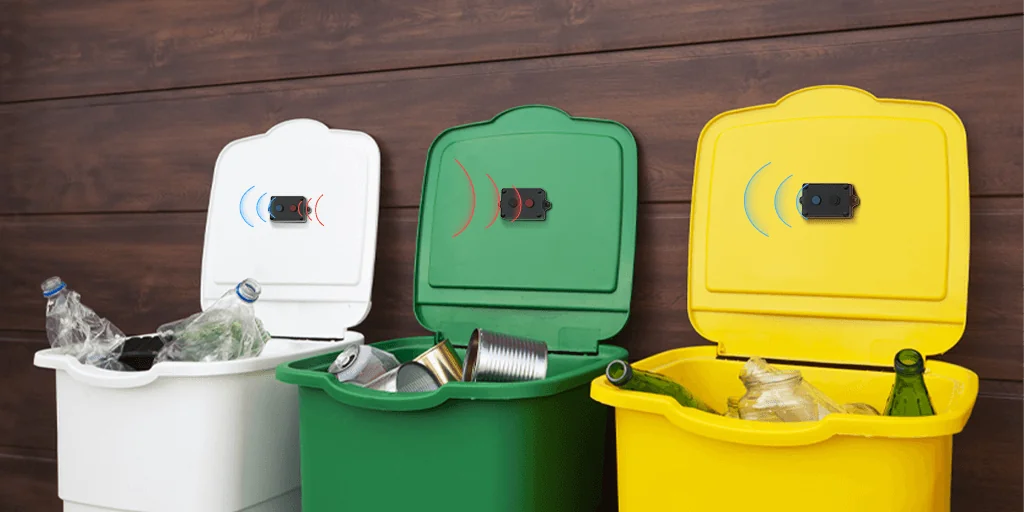
How Ultrasonic Sensors Power Our Smart Waste Solutions
One of our most successful applications of ultrasonic sensing technology is the HKT-UDS100 waste bin sensor. This device measures waste levels using ultrasonic beams and transmits data via the LoRaWAN® protocol to provide real-time monitoring of trash bins. By integrating LoRa communication, we ensure that data is transmitted over long distances — up to several kilometers — without compromising accuracy.
Our waste bin sensor’s IP67 waterproof rating, flame-retardant housing, and 5–10 year battery life demonstrate how ultrasonic technology excels where durability and consistency matter most. Unlike many IR sensors, which may be affected by ambient light or reflective materials, ultrasonic sensors maintain stable performance even in outdoor or harsh environments. This makes them particularly valuable for city sanitation systems, industrial waste management, and environmental monitoring.
Advantages That Set Our Technology Apart
When comparing IR distance sensor vs ultrasonic, the latter offers more versatility for wide-area monitoring. Our HKT-UDS100 sensors are built with low power consumption in mind, allowing them to remain operational for years with minimal maintenance. They support non-contact measurement, ensuring hygienic and safe data collection without physical interaction.
Furthermore, features such as GPS positioning, Bluetooth OTA updates, posture monitoring, and temperature-humidity tracking make our products not just sensors, but complete IoT data solutions. By combining LoRaWAN connectivity with ultrasonic precision, we enable smart systems that automatically detect overflow, optimize waste collection routes, and improve operational efficiency for municipalities and enterprises alike.
Conclusion
In the world of IR distance sensor vs ultrasonic comparison, we believe the choice depends on the application. At HKT LORA, we’ve found that ultrasonic sensors deliver superior results in environments requiring distance stability, wide detection range, and robust signal performance. Our HKT-UDS100 waste bin sensors embody that advantage, combining LoRaWAN efficiency with proven reliability. As IoT continues to redefine urban infrastructure, we remain committed to pushing sensing technology further — one smart, connected solution at a time.