

Consider the challenge of getting a small piece of data from a remote sensor to a central office. The solution employed by LoRaWAN networks is both efficient and methodical. For businesses evaluating this technology, a functional overview of the data pathway is invaluable. We at HKT LORA often clarify that how LoRaWAN works can be visualized as a relay system with distinct roles for each component. This process ensures data travels from a simple device to your application with both security and efficiency. Let’s examine the sequence that defines how LoRaWAN works in practice.
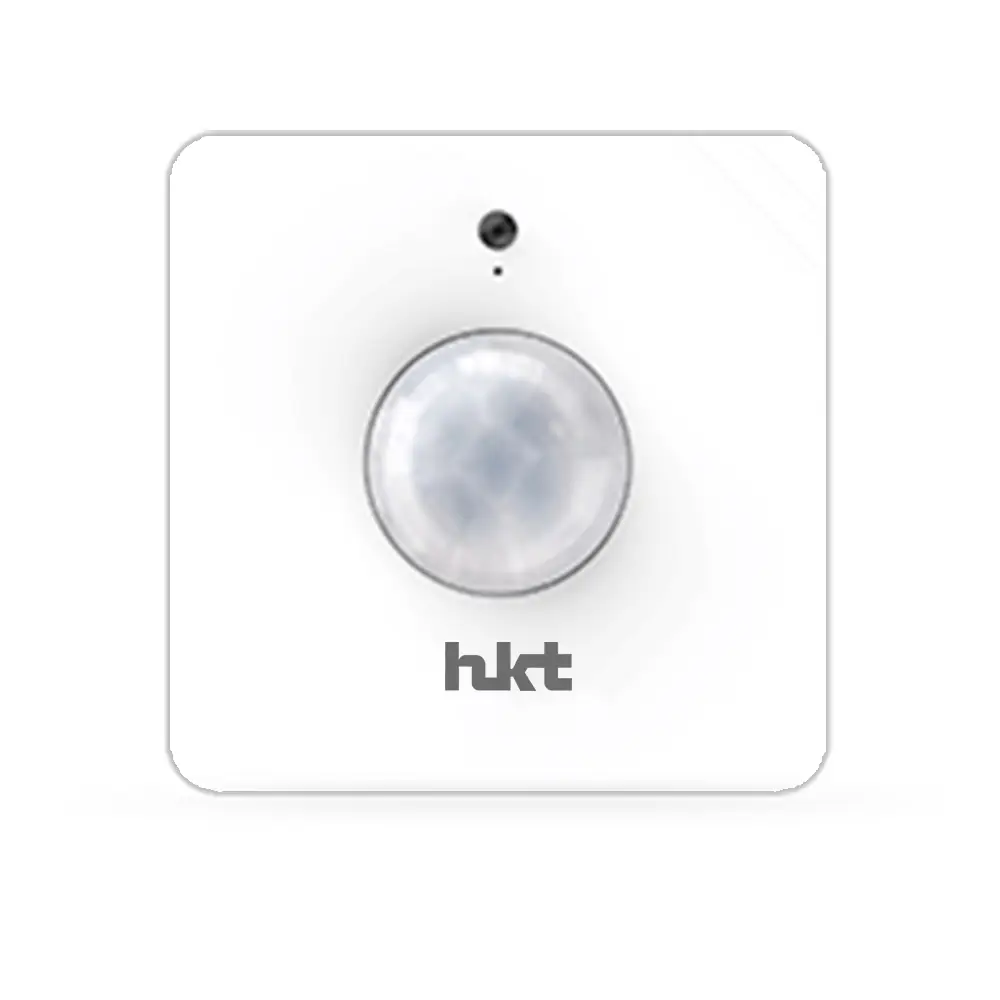
Device Activation and Transmission
The journey begins at the endpoint device. A sensor, like an HKT LORA monitor, collects data and prepares a packet for transmission. Before any data flows, the device must join the network through an activation process, typically Over-The-Air-Activation (OTAA). This step securely authenticates the device with the network server. Once joined, the device uses LoRa modulation to broadcast its data packet wirelessly. This signal is designed for long-range communication and very low power consumption, allowing a device to operate for years on a single battery. The broadcast is a one-way message sent into the air, not directed at any specific gateway.
Gateway Reception and Data Relay
Gateways form the next critical link in the chain. These units act as transparent receivers, constantly listening for LoRa transmissions from any and all devices in their vicinity. When a gateway picks up a packet from our HKT LORA device, its job is not to process or interpret the data. Instead, it functions as a packet forwarder. The gateway encapsulates the LoRa radio packet and immediately sends it to a central Network Server using a standard IP backbone, such as a wired Ethernet or cellular connection. A single data packet is often received by multiple gateways, providing redundancy that enhances delivery reliability.
Network Server Processing and Application Delivery
The Network Server is the intelligent core where the crucial tasks of management and security occur. It receives all the duplicate packets from the various gateways and performs deduplication, ensuring your application gets one clean copy of the data. It then validates the device’s security credentials and decrypts the payload. This centralized processing is a fundamental aspect of how LoRaWAN works, maintaining network integrity and security. Finally, the Network Server routes the decrypted application data to the correct customer-specific Application Server, where you can view, analyze, and act upon the information.
This segmented architecture is the strength of the protocol. By separating the functions of simple sensing, robust reception, and intelligent processing, LoRaWAN achieves a balance of range, battery life, and scalability. For industrial applications, this translates into a viable method for monitoring distributed assets without the complexity and cost of traditional wired systems. Our focus at HKT LORA is on ensuring the endpoint devices—the starting point of this entire chain—perform their role with consistency and accuracy, providing the reliable data your operations require.